


Resources
Alice House provides survivors, professionals, and community members with practical tools and educational resources to help break the cycle of intimate partner violence.
Community awareness and prevention education
At Alice House, much of our work is in response to instances of intimate partner violence. However, we know that to achieve a society free of violence, we need to increase public awareness and ensure our communities have the information they need to stop abuse before it begins. We deliver early intervention and educational workshops, focusing on creating healthy relationships and recognizing signs of abuse. Alice House facilitates community awareness presentations and training across Nova Scotia on the topics of Intimate Partner Violence, Gender Based Violence, and Respectful Relationships.
To schedule a presentation or training session, please contact us: [email protected].
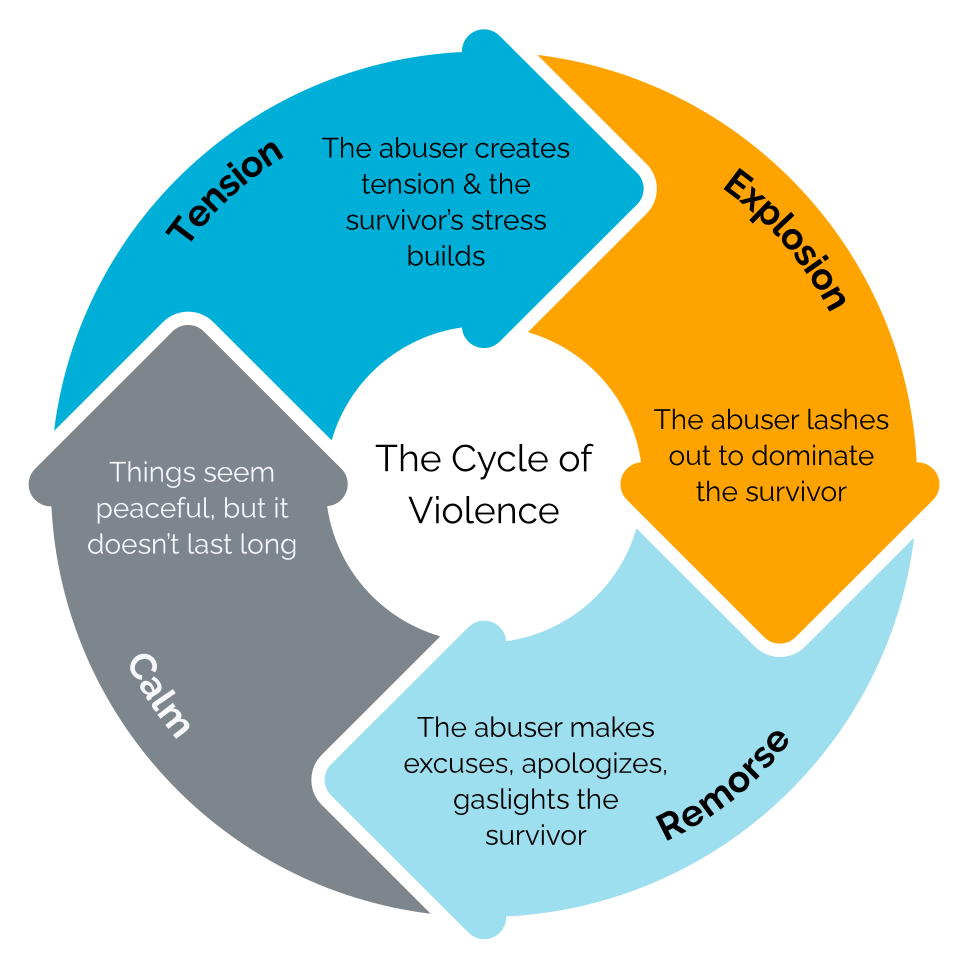
The Cycle of Violence
Many victim/survivors feel that the violence they experience is based on a cycle. Intimate partner violence is a repeated pattern of behaviour. This model highlights several phases: honeymoon, tension-building, and explosion. As abuse progresses over time, the explosion phase becomes more frequent and more severe.
From walking on eggshells to acute abuse to hearts and flowers and denial back to tension: you can leave at any point in this cycle.
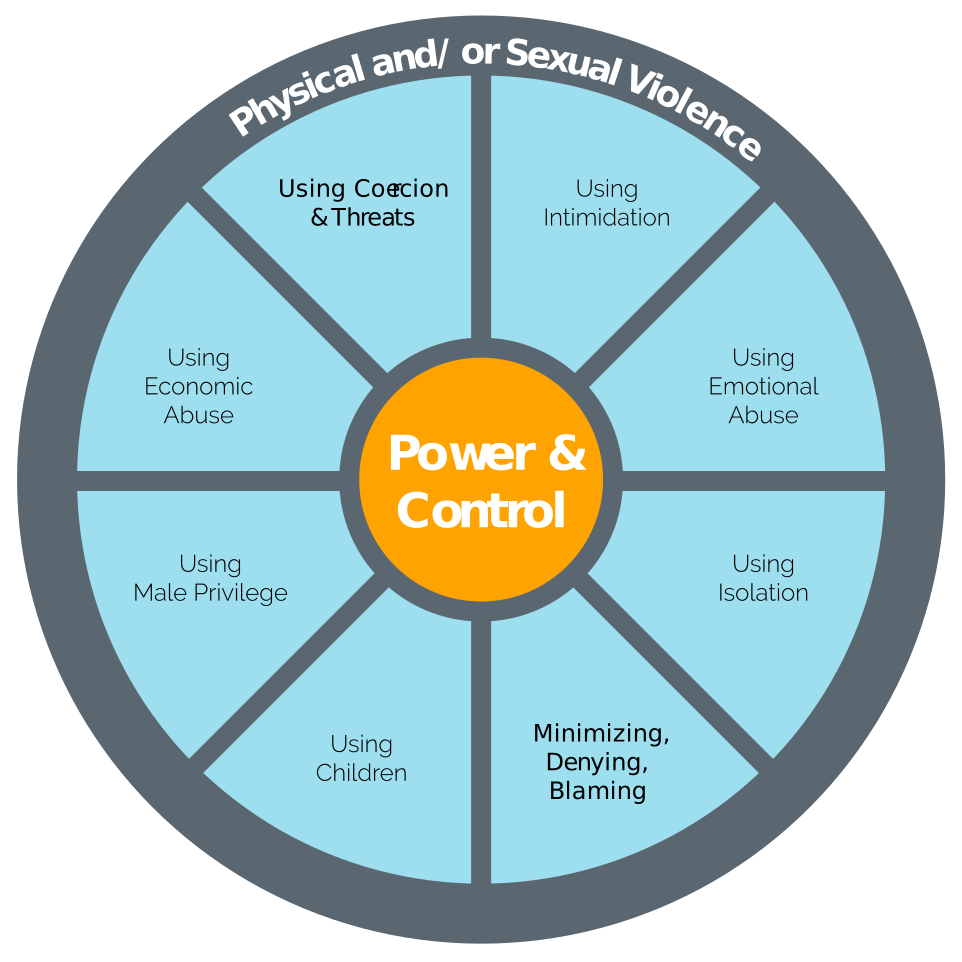
The Power & Control Wheel
After interviewing more than 20,000 women who experienced abuse in an intimate relationship, Ellen Pence and Michael Paymar developed this model to explain the nature of abuse, to define the forms of abuse used to control another person, and to educate people with the goal of stopping violence and abuse.
Relationship abuse and its complexity are hard to explain in a single diagram. However, the Power and Control Wheel presents a clear lens through which to examine domestic violence. Learn more about the Domestic Abuse Intervention Project.
Helpful definitions
Intimate partner violence: behaviour by an intimate or ex-partner that causes physical, sexual, emotional, financial, social, or spiritual harm.
Second-stage housing: longer term, individual housing, where tenants can live for an extended time. It offers programs and services to help with the transition to independent living.
Coercive control: Describes a pattern of controlling behavious that takes place over time in the context of intimate partner relationships, as well as familial relationships, and serves to isolate, harm, punish and frighten victims.
Sexualized violence: any act or behaviour, whether attempted, threatened or completed, that is perptuated without consent and targets an individual’s sex, sexual identity, or gender identity or expressesion; includes acts prohibited in the criminal Code, such as sexual assault, criminal harassment (stalking), indencent exposure, voyeurism and sexual exploitation.
Gender-based violence (GBV): an umbrella term which refers to violence that is characterized by the subordinate status of women, gils and gender minorities in society. GBV is deeply rooted in and intensivied by systemic inequalities like poverty, colonialism, and discrimination.
Self-determination: Refers to the rights and needs of service users to make their own decisions about their lives. Promoting self-determination looks like enhancing service users’ capacity and opportunity to change and address their own needs, providing adequate and full information to service users about options, and respecting that service users are the experts in their own lives.
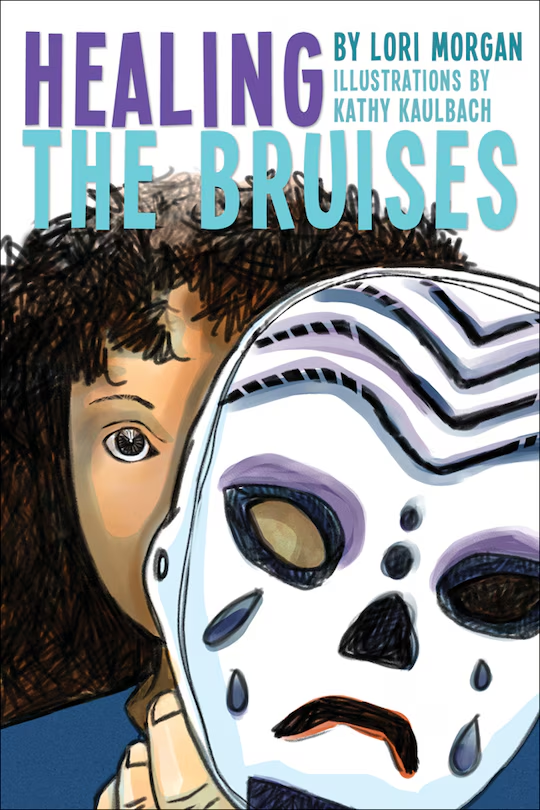
Impact of abuse on children
Children exposed to intimate partner violence need to have hope that life will get better. A 34-page graphic novel was written by past Alice House counsellor Lori Morgan with the intention of helping children understand domestic abuse. It is titled Healing the bruises: through the eyes of a child: a journey from domestic abuse to safety.
What Can I Do?
An abusive relationship is often a confusing mix of love, fear, dependency, intimidation, guilt and hope. If this is happening in you, remember that you are not alone. Women of all ages, ethnic backgrounds and levels of income and education are affected by intimate partner violence. There are people that can help you and your children. Give yourself a chance at safety.

Growing Together is designed for service providers who support women with young children.

Alice on the Go is a self-paced online healing program for women and gender-diverse survivors of intimate partner violence.